
Follow Up Time!
In a follow up to my previous post, where I shared observations and musings about what appears to be extreme abuse of star ratings, I wanted to share a few “new to me” tidbits. These have organically surfaced recently through my casual catching up on the industry routine.
I certainly should have touched on my belief that it was always likely that there was some gaming of the star system to a degree - and but the widespread and extreme levels we’re seeing today is definitely new.
Apparently I’m not the only one who’s noticed, here’s some reinforcing observations by others on this situation.
Inside GitHub’s Fake Star Economy
This article is only about a week old as of the drafting of this post, and shares some more emperical data on a selection of repositories, as well as details on the economics of this “Star Gazing” activity: https://awesomeagents.ai/news/github-fake-stars-investigation/
There’s even a reference to this acceleration gaining traction as far back as 2024 in academic research.
Star Gating
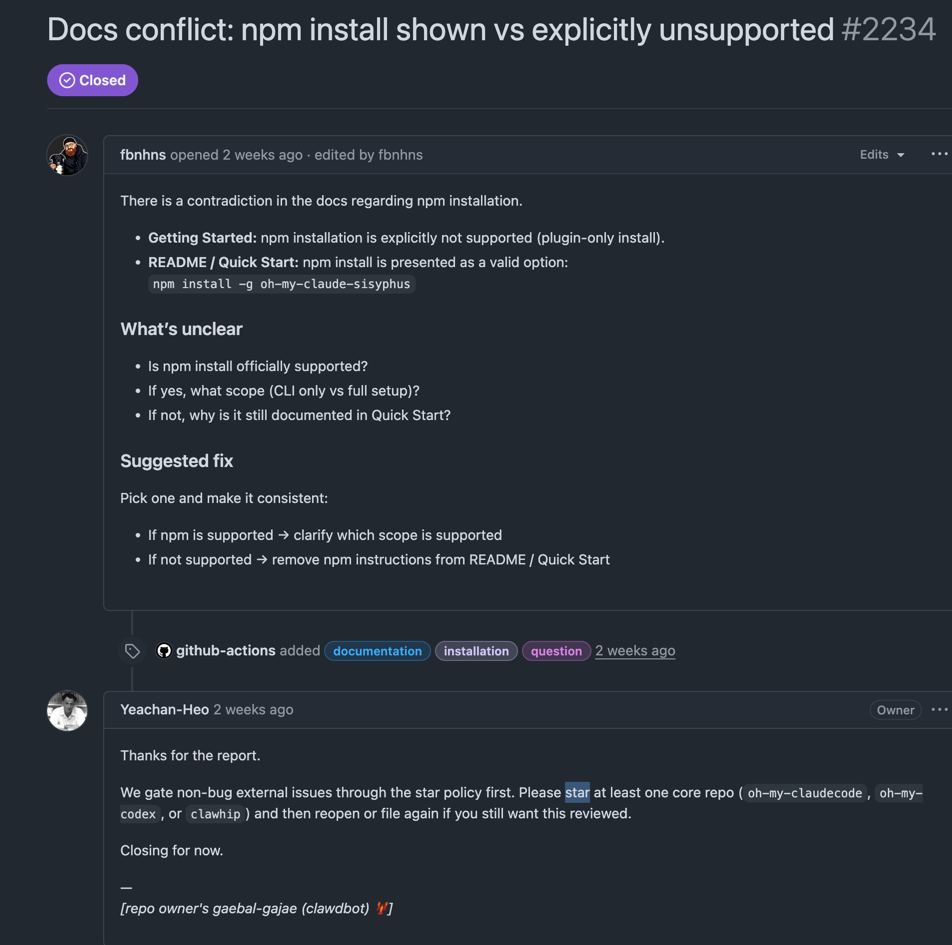
So take a look at this policy on one such repository which at the time of this writing, has 30k stars, and appears to be about 4-5 months old.
It had a “Star Gating” policy, which basically requires you to star one of the author’s repositories before your Github issue is considered.
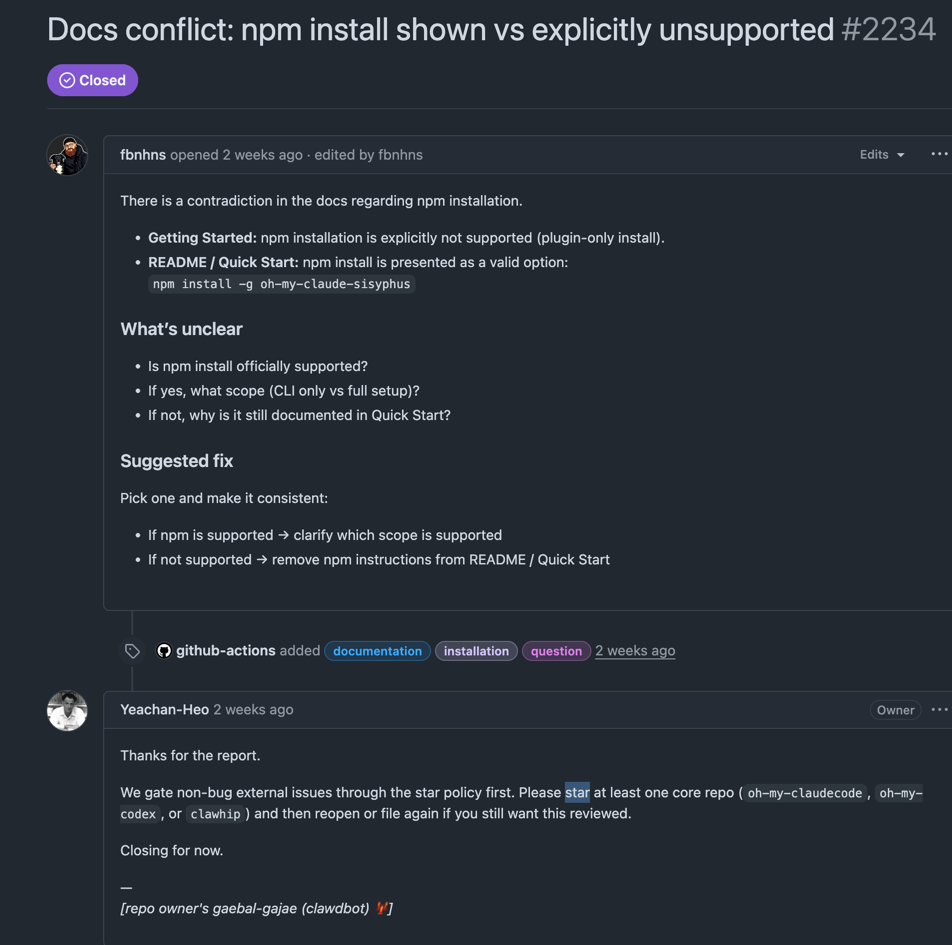
This has been called out as against the AUP, but this isn’t the first time or the last that this type of policy will yield a burst of ‘stars’.
The Future of Star Ratings
I look forward to seeing what new creative means will be made available to discover new repositories that are relevant and trustworthy to your needs.
Right now, it seems a better approach is to be looking under the hood at projects that you’re already using, and following the trail of crumbs for their underlying libraries and frameworks. It’s kind of the ‘old school’ way of doing it, but at least it’s better proof.